.png)
Building Toward Stability: How HCN's Workforce Program Is Changing What's Possible for Families

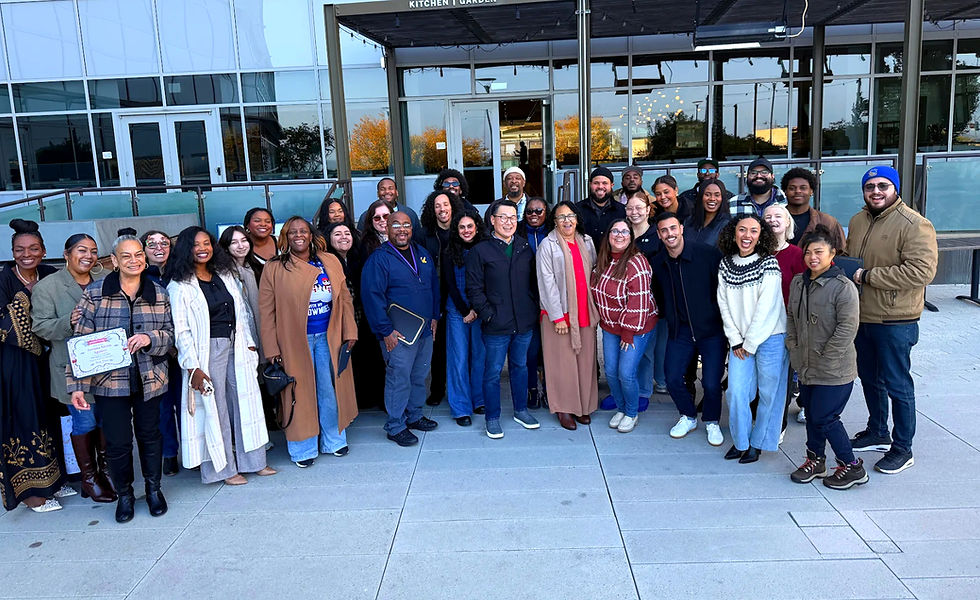
HCN Case Managers and workforce trainers
When Andrea* joined HCN's Family Support & Workforce Development Program, she was ready for a fresh start. Andrea was a young mother trying to survive one of the hardest chapters of her life. She made the difficult decision to leave an unsafe relationship behind in hopes of creating a safer future for herself and her child. She dreamt of giving her child a better life.
For months, Andrea did not have a stable place to live, often staying with relatives. Although grateful for temporary shelter, she longed for stability, a home she and her child could finally call their own. Despite the uncertainty surrounding her, Andrea never gave up on rebuilding her life. When she found HCN's Family Support and Workforce Development program, she found a team of people prepared to help her get there.
Through the program, her Case Manager worked closely with her to strengthen her resume and create a LinkedIn profile to help expand her opportunities in the workforce. With guidance, support, and her own determination, Andrea began applying for jobs and building her confidence. Her hard work soon paid off. Andrea was offered a full-time position. In addition to employment, the company also helped provide childcare support, allowing Andrea to focus on building stability for her family.
As she transitioned into her new role, we were able to assist Andrea with emergency funding to purchase items for her professional role. This support helped ensure she could begin her new position without additional stress or financial burden.
The program, made possible through support from The Church of Jesus Christ of Latter-day Saints, launched in November 2025 as a first-of-its-kind pilot; serving individuals and families from historically marginalized communities across San Francisco, including people experiencing homelessness or housing instability, those managing dual diagnoses, and those who have long been underserved by traditional workforce systems. The current cohort includes 12 women, 10 of whom are raising children, all enrolled with the shared goal of building more stable, self-sufficient lives for themselves and their families.
Building Skills and Confidence Over 16 Weeks
Each participant works closely with a dedicated Case Manager over 16 structured weeks, moving through a curriculum that covers resume development, interview preparation, LinkedIn profile creation, communication strategies, and stress management. Case Managers meet with participants weekly through a combination of virtual, phone, and in-person sessions, with in-person meetings consistently proving most effective for building the kind of trust that allows for honest, productive conversation about what a participant actually needs in a given week.
One of the things the program does particularly well is helping participants recognize and articulate the skills they have already developed through their life experience, including unpaid roles that rarely make it onto a traditional resume. Destiny*, who had spent years serving as a church pastor's assistant without ever considering it formal professional experience, worked with her Case Manager to reframe that history in terms of the concrete skills it had required, and walked away with a resume that accurately reflected what she was capable of. That shift, from someone who did not think she had much to offer on paper to someone who could speak to her value with clarity and confidence, is one of the outcomes the program was specifically designed to produce.
Technology access has been a meaningful part of that process as well, with free laptops provided by Robert Half, participants can communicate with their Case Managers, apply for positions, and access resources from home rather than depending on public computers with limited hours and availability. The program incorporates a bilingual curriculum, developed with volunteer support to fuel accessibility to Spanish-speaking participants in their own language, removing a barrier that would otherwise have narrowed who the program could meaningfully serve.
Early Outcomes That Tell a Clear Story
Six months into the pilot, the results coming out of participant evaluation surveys are striking in their consistency. Every single participant reports feeling more hopeful as a result of the program, and every participant says their sense of self as a professional has improved in ways they can feel and describe:
91% report greater housing stability
82% report greater financial stability, and
100% say they are satisfied with the program overall
These numbers that reflect not just what the curriculum delivers but the quality of the relationships Case Managers have built with each person in the cohort.
Two participants secured employment while still actively enrolled; Andrea* was one of them, landing a full-time position as a Customer Service Representative, a role that also came with childcare support so she could focus on stabilizing her family. Emergency funds helped cover the purchase of her uniform immediately, ensuring she could show up to her first day without any obstacles.
Monthly stipends have helped participants across the cohort meet essential needs including rent, utilities, and household expenses. One family’s steady financial support played a direct role in a participant securing permanent housing after a period of homelessness. Flexible emergency funds have covered the kinds of costs that might seem small in isolation but carry enormous weight when a family has no financial buffer: school clothes for children, glasses, driver's license course and application cost, and car repairs that are essential to getting to work and keeping daily life functioning. For Andrea*,permanent housing is the next goal, and HCN's Case Managers are still working alongside her as she pursues it.
That continuity of care, the commitment to staying present with someone even as the formal program winds down, is what makes this model worth expanding.
HCN is conducting an external evaluation of this pilot in partnership with Indigo Cultural Center, with a full program evaluation report planned for fall 2026. A family-friendly graduation celebration and job fair are on the horizon for participants as they complete the cohort, and employment placement support will continue for up to three months after the program ends.
To support HCN's work with families across San Francisco, visit www.hcnkids.org/donate.
*Names have been changed to protect participant confidentiality.